
Exterior House Painting Cost in MetroWest Massachusetts: 2026 Complete Guide

The most common question MetroWest homeowners ask before starting an exterior project is simple: how much is this going to cost? The honest answer requires more than a single number — but after 30 years of exterior painting work across Hopedale, Milford, Franklin, and Woonsocket, we can give you real ranges rather than vague estimates.
In 2026, exterior painting in Massachusetts runs between $3.00 and $6.50 per square foot for most homes. What pushes a project toward $3.00 or toward $6.50 — or beyond — comes down to siding type, surface condition, story count, and whether your home was built before 1978. This guide walks through each factor so you can budget accurately before any contractor sets foot on your property.
What Does Exterior House Painting Cost in MetroWest Massachusetts in 2026?
The baseline: professional exterior painting in Massachusetts costs between $3.00 and $6.50 per square foot in 2026, according to pricing data compiled for Middlesex County, Norfolk County, and the MetroWest market. Homes with historic features or lead-based paint can reach $8.00 per square foot due to containment requirements, additional prep, and the safety protocols mandated under the EPA RRP Rule. ( GL Alliance Painting — Massachusetts 2026 Cost Guide)
MetroWest communities — Milford, Hopedale, Franklin, Bellingham, Hopkinton, Holliston — tend to run in the middle-to-upper range. The region's older housing stock comes with more trim detail, more complex rooflines, and more layers of existing paint to deal with than newer construction. Add New England's freeze-thaw cycle, which works into every surface imperfection over a winter, and prep time increases meaningfully.
Cost by Home Size: What MetroWest Homeowners Should Budget
Square footage is the starting framework, but the ranges within each size tier are wide for a real reason. Here is current 2025–2026 pricing data from the Massachusetts market, based on MetroWest project data from Paint Pro New England:
| Home Size | Typical Exterior Cost (MA, 2026) |
|---|---|
| Small (under 1,500 sq ft) | $3,000 – $5,000 |
| Medium (1,500 – 2,500 sq ft) | $5,000 – $9,000 |
| Large (2,500 – 3,500 sq ft) | $8,000 – $14,000 |
| Very Large (3,500+ sq ft) | $12,000 – $20,000+ |
For reference, a 2,000 sq ft home falls squarely in the medium range. GL Alliance Painting's 2026 data puts that specific size at $5,675 to $10,561 for exterior work in Massachusetts — a spread driven by surface condition, siding type, and story count. The typical two-story colonial in Hopedale or Milford falls right into this range. ( GL Alliance Painting, 2026)
Story count shifts the price significantly. Multi-story homes require scaffolding or ladder setups that take more time to erect, slow production when working at height, and add equipment cost. According to SL Painting's 2026 Massachusetts data, a two-story home typically costs 30–50% more than a comparable one-story home to paint. A three-story adds another 20–30% on top of that. ( SL Painting — Massachusetts Exterior Cost Guide, 2026)
How Siding Type Changes the Price
The material on your home's exterior determines the preparation approach, primer requirement, and labor time from the first brush stroke to the last. This is the factor most homeowners underestimate when reading quotes side by side. Pricing data from the Massachusetts market in 2026:
| Siding Type | Cost per Square Foot (MA, 2026) |
|---|---|
| Wood Siding (standard clapboard) | $3.00 – $4.00 |
| High-end / detailed wood | $4.00 – $6.50 |
| Vinyl Siding | $2.50 – $3.00 |
| Brick / Masonry | $4.00 – $6.00 |
| Stucco (minimal prep) | $2.50 – $4.00 |
| Pre-1978 Homes (lead-safe protocol required) | $4.00 – $6.50 |
| Historic / highly detailed older homes | $6.00 – $8.00 |
Source: GL Alliance Painting, 2026
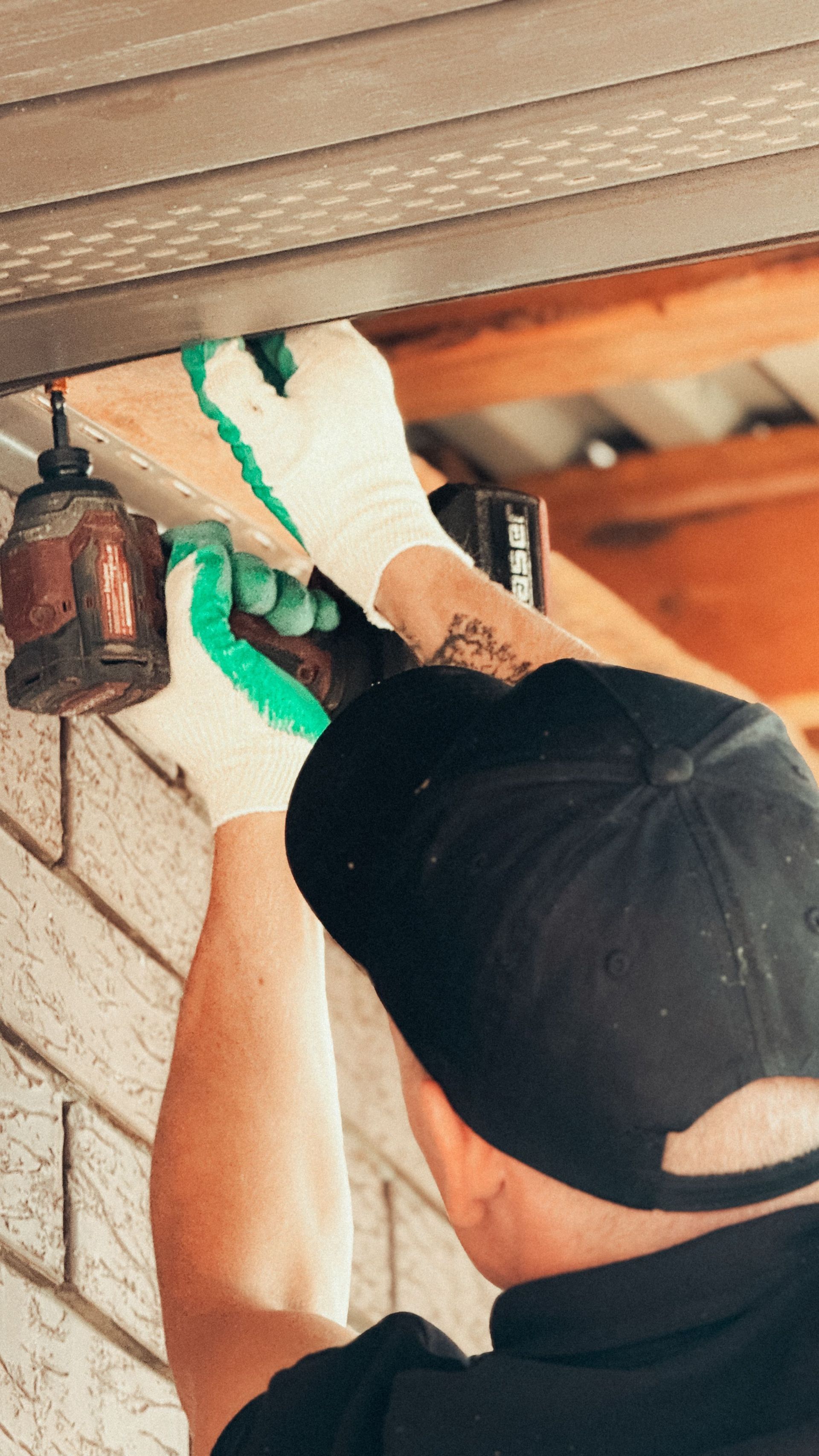
Most MetroWest homes are wood-sided — clapboard colonials and cape cods from the mid-1900s. Wood is durable and takes paint well, but it demands more prep than vinyl: scraping failing paint, sanding, caulking every joint and trim interface, and spot-priming all bare wood before finish coats go on. Where underlying boards have gone soft or caulking has failed completely, siding repair needs to happen before painting — applying fresh paint over compromised material only delays a larger problem.
Brick and masonry sit at the higher end because they require specialized primers and careful transitions at trim to prevent moisture migration — a real concern in the New England climate. Vinyl costs less per square foot partly because it requires less scraping, but it still needs proper prep and paint products formulated to flex with New England temperature swings.
The Single Biggest Variable: Surface Preparation
Two identical 2,000 sq ft colonials on the same street can carry quotes that are $3,000 apart. The difference is almost never the paint — it is almost always prep.
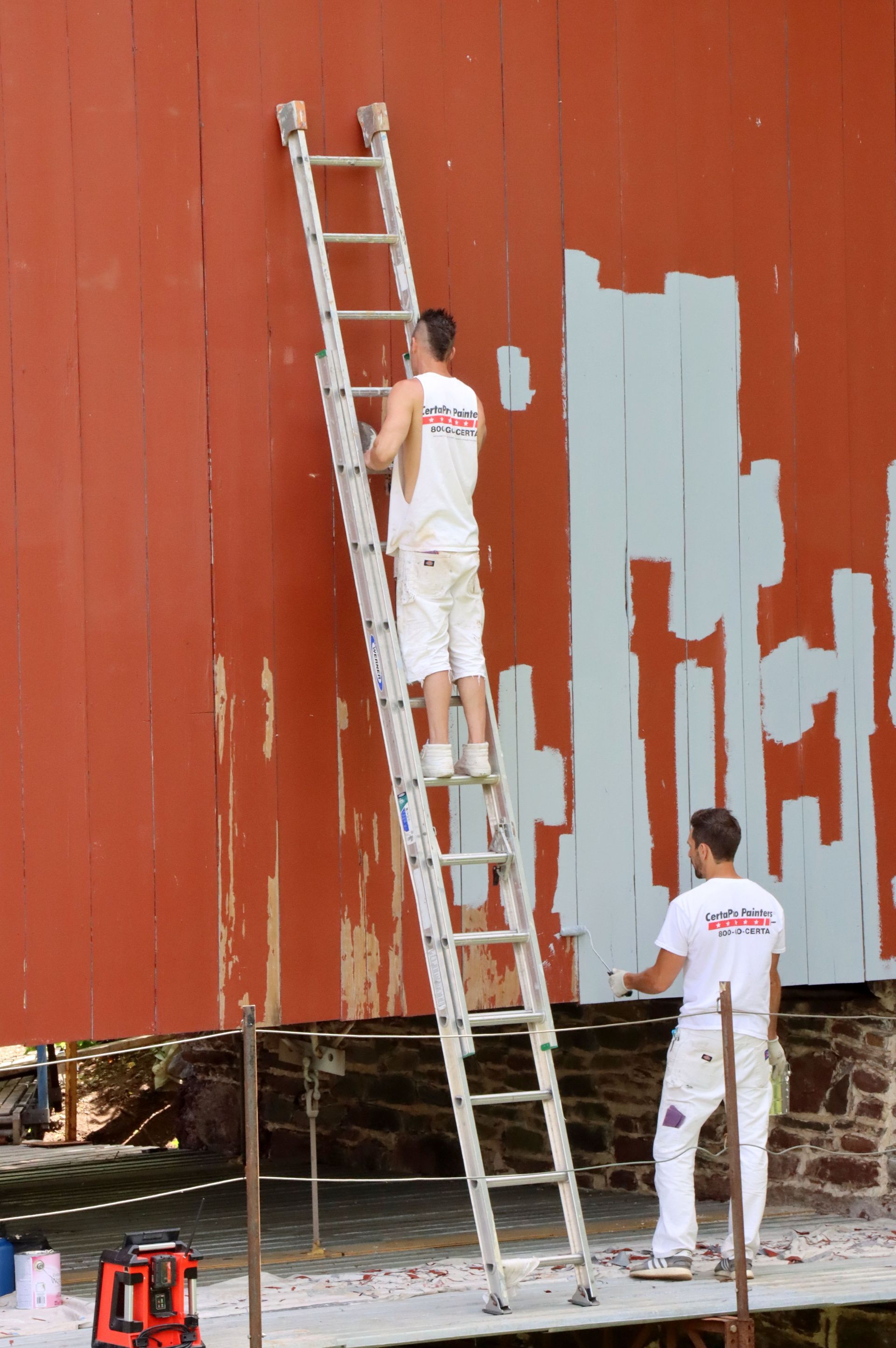
A well-maintained home needing only a fresh color might require 4–6 hours of scraping and surface work. A home with years of peeling paint, failed caulking, and wood rot at the trim can need 20–40 hours of prep work before a single drop of finish coat is applied. That gap is what separates a $4,500 project from a $7,500 project on a home of the same size. ( SL Painting, 2026)
Labor accounts for roughly 70–75% of the total cost of any exterior paint project, and within that labor budget, surface preparation is the most time-intensive phase — it typically takes more hours than the actual painting. Skipping or shortcutting prep is where low bids hide. A significantly lower quote almost always signals thinner prep, fewer coats, or a lower-grade product. ( SL Painting, 2026)
A complete professional prep on a MetroWest home includes pressure washing(with surfaces allowed to dry fully — 24–48 hours — before painting begins), scraping all loose and failing paint, sanding, patching holes, caulking every gap at windows, doors, and trim joints, and priming all bare wood. Where rotted or damaged trim boards need replacement, our carpentry services handle that work before any finish coat is applied. Paint that goes on top of structurally sound, properly prepped surfaces is the only paint that lasts 7–10 years in a New England climate.
Lead Paint Homes: The 30% Premium You Must Budget
If your MetroWest home was built before 1978, budget for lead-safe protocols. In communities like Milford, Hopedale, and Woonsocket, pre-1978 housing is common — and Massachusetts's older housing stock means this is a routine reality, not an edge case.
Lead-safe exterior painting requires EPA RRP-compliant containment, HEPA filtration, certified tools, and detailed disposal documentation. According to GL Alliance Painting's 2026 Massachusetts data, homes with lead paint typically cost about 30% more to paint than comparable homes without it. On a $7,000 base project, that is approximately $2,100 in added cost — required by law and non-negotiable. ( GL Alliance Painting, 2026)
Any contractor quoting an exterior job on a pre-1978 home at standard pricing without addressing lead-safe protocol is cutting corners that create legal and health liability for you as the homeowner. Our full breakdown of what Massachusetts law requires is in our guide to lead paint in Massachusetts homes and the EPA RRP Rule.
When to Schedule: The New England Exterior Painting Window
Massachusetts gives exterior painters a defined season — and knowing the window helps you book before the calendar fills up. CertaPro Painters of Andover, MA identifies April through October as the reliable exterior painting window for Massachusetts, with warmer temperatures and direct sunlight supporting proper curing and a consistent finish. ( CertaPro Painters of Andover, MA)
Within that window, MetroWest contractor Paint Pro New England — with 15 years of New England experience — specifies that most exterior paints require temperatures between 50°F and 85°F during application and for several hours afterward, with relative humidity between 40–70% . Below 50°F, paint does not cure properly. Above 85–90°F, it dries too fast and creates adhesion problems. Surfaces also need 24–48 hours to dry after rain before painting can begin safely. ( Paint Pro New England — Best Time to Paint Exterior in Massachusetts)
In practical terms, May, June, September, and October are the strongest months in MetroWest. July and August are workable but require monitoring — afternoon humidity and storm risk can interrupt projects and force delays. Book early: prime-season slots in MetroWest are typically filled by late March for May and June starts. If you are planning a full exterior project, now is the time to get estimates and get on a schedule.
For deck restoration work, the same weather window applies. See our guide to deck staining vs. painting in Massachusetts for product-specific timing requirements before your next deck project.
How to Compare Painting Estimates Without Getting Burned
Three quotes for the same house: $4,800, $7,200, $9,400. This scenario is common, and the gap almost never comes from the cost of paint itself — which represents only 15–25% of the total project price . The differences live in prep scope, coat count, product quality, and warranty terms. ( SL Painting, 2026)
Before signing any estimate, confirm each of these in writing:
- Prep work itemized. Power washing, scraping, sanding, caulking, priming — what is specifically included, and to what standard.
- Coat count. Two finish coats is the professional standard for lasting, even coverage.
- Paint product specified. Brand and product line matter. Mid-range to premium paints from Benjamin Moore or Sherwin-Williams deliver 7–10 year lifespans in New England; budget products cut that to 3–4 years.
- Warranty in writing. A contractor who backs their work provides written workmanship warranty terms, not just material guarantees.
- License and insurance documentation. Massachusetts OCABR registration and general liability coverage protect you if something goes wrong on your property.
A significantly lower price almost always signals something missing — usually prep depth or coat count. A thin-prep job on a MetroWest colonial exposed to New England winters will start failing within two to three years, costing more to fix than it saved.
The investment also holds up financially. According to SL Painting's 2026 industry data, a professional exterior paint job returns 60–70% of its cost at resale while simultaneously protecting the home's structure from moisture intrusion and weather damage that compounds over time. ( SL Painting, 2026) A home with peeling paint signals deferred maintenance and suppresses buyer offers by far more than a fresh paint job costs.
Frequently Asked Questions: Exterior Painting in MetroWest MA
How often do MetroWest homes need exterior repainting?
Most Massachusetts homes with wood siding need repainting every 7–10 years . Fiber cement siding can go 10–15 years between full paint jobs. Both timelines assume proper surface prep and premium 100% acrylic paint — bargain products or minimal prep typically cut that lifespan to 3–4 years. ( SL Painting, 2026)
Does exterior painting cost more on older MetroWest homes?
Usually, yes. Older homes typically have more trim detail, more layers of existing paint requiring prep, and a higher probability of lead paint if built before 1978. More complex architectural detail increases labor time, and lead-safe protocol adds approximately 30% to the base project cost. Budget for these before comparing quotes from different contractors.
What is included in a complete exterior paint job?
A complete professional exterior paint job includes power washing, scraping and sanding all loose paint, caulking joints and gaps at windows and trim, priming bare wood, and applying two finish coats. Any carpentry repairs needed — rotted trim, damaged fascia, failing windowsills — are scoped separately and completed before painting begins.
Can I paint my house exterior in the winter in Massachusetts?
No. Most exterior paints require temperatures above 50°F during application and for several hours after to cure properly. December through March falls outside this window in MetroWest. Interior painting can be scheduled year-round and is a productive way to use the off-season while you plan your spring exterior project.
Do you handle wood rot and carpentry repairs before painting?
Yes. We assess all trim, fascia, windowsills, and siding before any exterior project. Rotted or damaged sections are repaired through our carpentry services before the first coat goes on — painting over deteriorated wood only delays a larger repair bill. Our guide to wood rot repair before painting in MetroWest covers what to look for during your own pre-project walkthrough.
Ready for an accurate estimate on your MetroWest home? Oliveira Painting & Carpentry has served Hopedale, Milford, Franklin, Bellingham, and surrounding communities for 30 years. Call (508) 498-8377 or contact us online for a free estimate.